Digital marketing today looks nothing like it did two years ago. And if you are a marketing student, trying to crack the industry, a business owner juggling with campaigns, or working in a digital marketing company, you have probably noticed a massive change in how AI is transforming digital marketing in 2026.
According to the data published by the Press Information Bureau, India has around 1.8 lac startups, and nearly 89% of new startups launched last year are using AI in their products or services. And globally, the story is even bigger. AI could add $1.7 trillion to India’s economy by 2035. That’s not happening in some distant future. The foundation is being laid right now, in 2026, with new tools and platforms in the market.
Now you know that your competitors are already using AI. Your customers demand AI-powered experiences. And if you are still thinking of AI as some futuristic concept, then sorry, you are already behind.
But it’s never too late. In fact, 2026 is the perfect time to understand what’s actually changing, what this hype is all about, and figure out how to use these tools without losing the human touch that makes marketing work.
Let’s break down through this blog what exactly is happening and why this shift matters to you.
The AI Shift in Digital Marketing
Think about how you marketed even two to three years ago. You manually segmented email lists, spent hours analyzing campaign data in spreadsheets, and wrote every piece of content yourself.
Now?
AI handles the work while you focus on strategy and creativity. Also, the psychology has changed. We have moved from asking “Should we use AI?” to How do we use AI better than our competitors? And that’s a completely different game. The marketing executives who thrive in 2026 are the ones who see AI as their support system, not their replacement.
What AI Means for Digital Marketing in 2026
AI processes massive amounts of data instantly, predicts what your customers want before they know it themselves, and personalizes experiences at a scale that was impossible before.
If you are a student entering this field, that means you need to understand AI tools just like you would learn Google Analytics or Facebook Ads Manager. If you are a business owner, that means your marketing budget can finally work harder without requiring you to hire a big team. And if you are a marketing manager? You can finally focus on strategy instead of making systematic reports.
However, AI in 2026 is not just a single tool or trend. It’s embedded into almost everything you do, from how people find you on search engines to how you nurture leads and measure success.
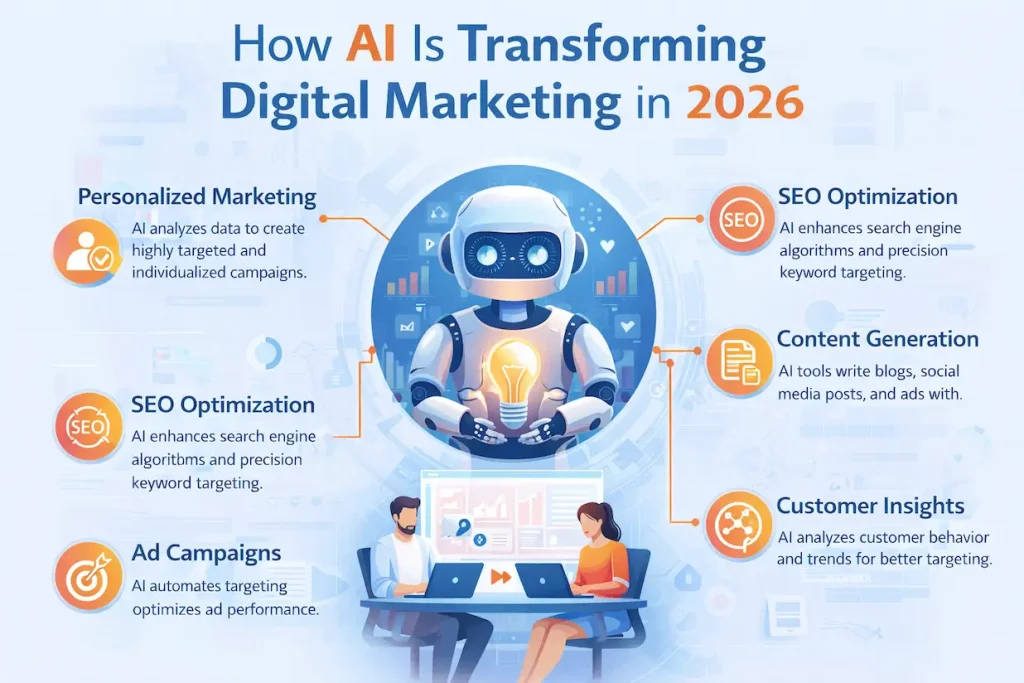
How AI Is Transforming Digital Marketing in 2026
The transformation because of AI is visible at every stage of the customer journey. Let’s understand in detail how it has reshaped the entire digital marketing landscape in 2026:
- Hyper-Personalization at Scale
You know that feeling when a brand just gets your point of view? That’s AI-powered personalization, and in 2026, it will take over manual digital marketing efforts.
Now you can adjust subject lines and content in your email campaigns, and send time-based reminders on individual behaviour patterns. AI can give you a rough idea of how your website will look when you actually design it with a particular design or style. Your product recommendations feel accurate because AI analyzes hundreds of data points that you can never spot manually.
- Predictive Analytics and Smarter Decision-Making
AI in 2026 doesn’t just tell you what happened last month, it tells you what’s likely to happen next month. Which customers might be interested in knowing more? Which content topics will resonate with your audience?
AI analyzes the patterns and gives you actionable predictions. If you compare to the past 5 years, it has become very easy to test and launch ads because making a creative writing message can also be done with the help of AI. Now, you can identify winning strategies faster and allocate budget with confidence.
- AI and the Future of SEO & Search Experience
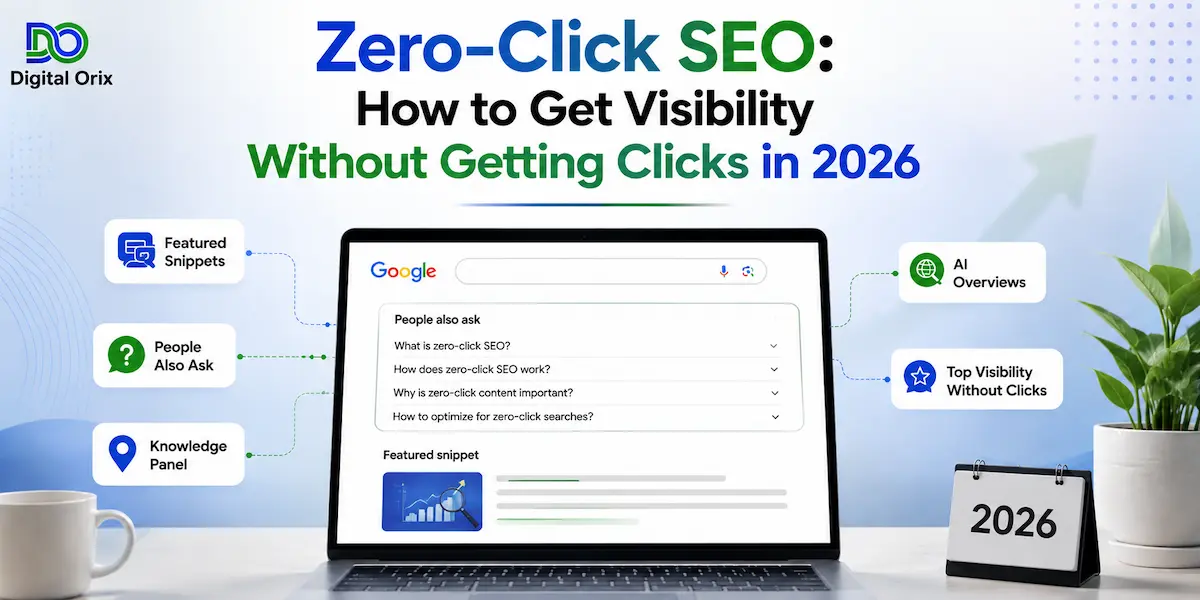
The days of blue links are fading, and search has become conversational. AI doesn’t just find keywords; it understands intent. In fact, govt. platforms like Bhashini now allow users to interact with digital services in over 20 Indian languages, meaning your SEO strategy must now account for multilingual voice search and regional nuances. If your content doesn’t provide direct, authoritative value that AI agents can cite, you’re invisible. Read more how AEO are changing SEO in 2026.
- AI-Powered Content Creation and Optimization
AI helps you in many ways to create and optimize your content. It suggests scenarios that you have never considered, and speeds up production. But the strategy and emotional intelligence? That’s still yours.
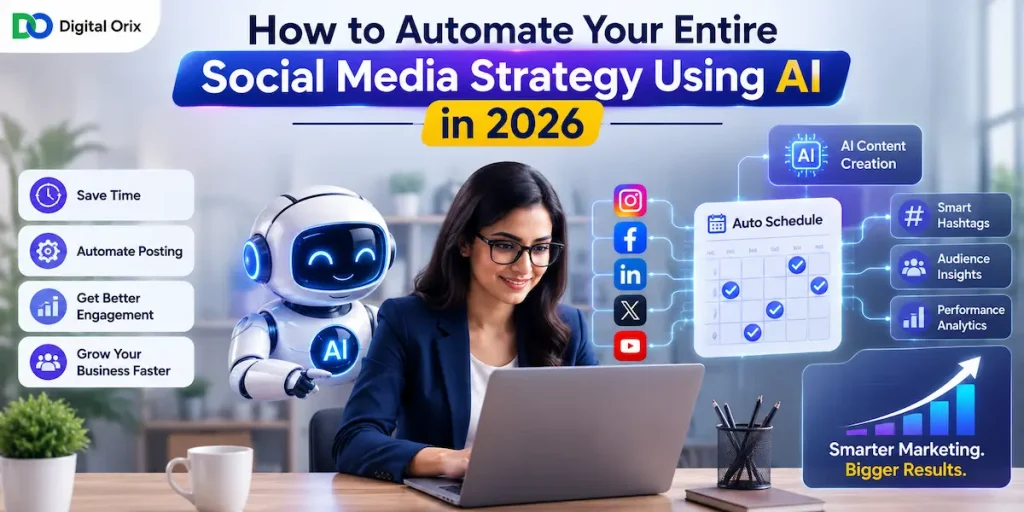
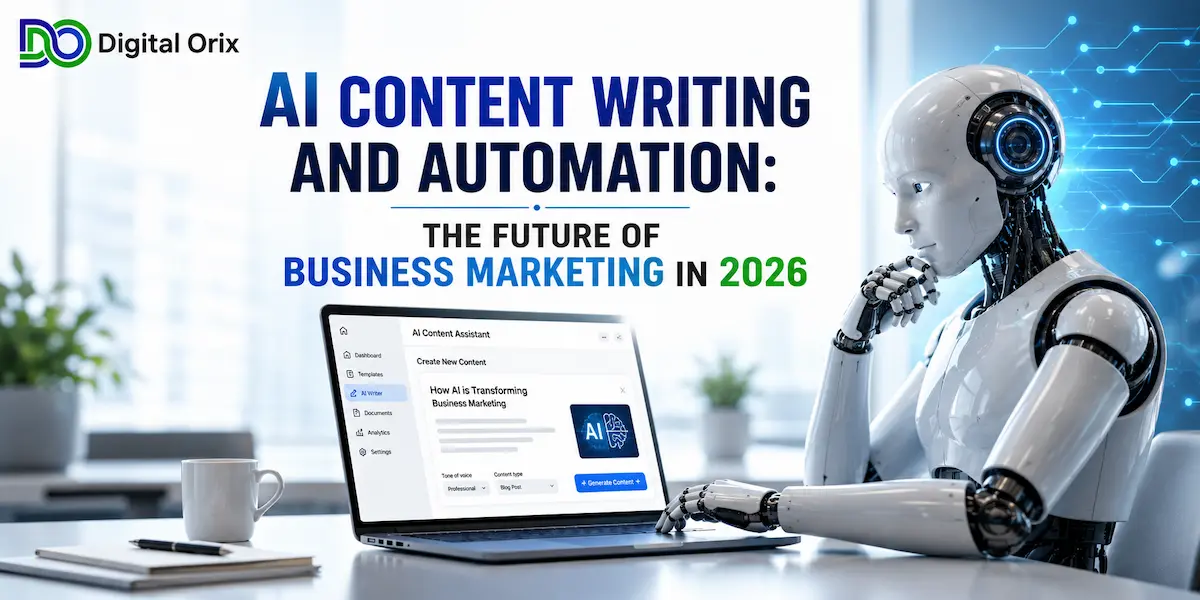
You can use AI to do competitor research, generate outlines, optimize headlines, and repurpose your content across various channels. You can write a blog post, and AI will create snippets, email versions, and video scripts from it. Now you are not working hard, you are working smart. The content that wins in 2026 combines AI efficiency with human creativity.
- Conversational AI and Customer Engagement
In 2026, AI bots can handle complex customer inquiries for you and don’t sound like robots. They understand your client’s point of view, remember their previous conversations, and actually solve problems instead of frustrating them.
Similarly, if we talk about Bhashini, an AI-powered voice-first language translation platform that enables real-time, multilingual translation across 22 Indian languages for apps and websites. It has already crossed a million downloads, proving that customers are comfortably engaging with AI chatbots that speak their language.
- Data, Privacy, and Ethical AI in Marketing
AI has made data collection and optimization very easy. But we should forget the fact that it comes with a lot of responsibilities because the government has strict rules against data violations. So, it is important to make sure that the usage of AI is ethical.
Over the time, customers have also become conscious about their data. They know you are using AI, and they want transparency about it. The businesses that win are the ones that use AI responsibly, collecting only what they need, securing it properly, and giving customers control. If you are a business owner or marketing executive, then you should have clear policies. And, if you are a student entering this field, then it is important for you to learn the crux and ethical implications of your work.
Challenges and Limitations of AI in Digital Marketing
As AI is helpful in all businesses, but it comes with a few challenges for you, such as:
- Require Learning: AI tools are powerful, but they require you to feed the database and provide core details of the project to understand the content. You can’t just press a button and expect results. You have to train the AI with good data and optimize regularly.
- Comprehensive Data: AI is only as good as the data you give it. If your client’s data is messy or biased, the AI can’t help in amplifying that. You need to add clean, comprehensive data to get the best results.
- Need Human Creativity: AI cannot match the creativity humans can bring, nor its emotional intelligence. It always need a need a human to give instructions and feed the necessary information and database. It doesn’t understand humor or subtle brand positioning the way you do. It can definitely help you in many ways, but cannot lead the human position.
- Investment & Training: Nowadays, AI tools are becoming more accessible for you, but implementing them properly, especially for complex marketing operations, requires investment, training, and expertise.
How Businesses Can Prepare for AI-Driven Marketing
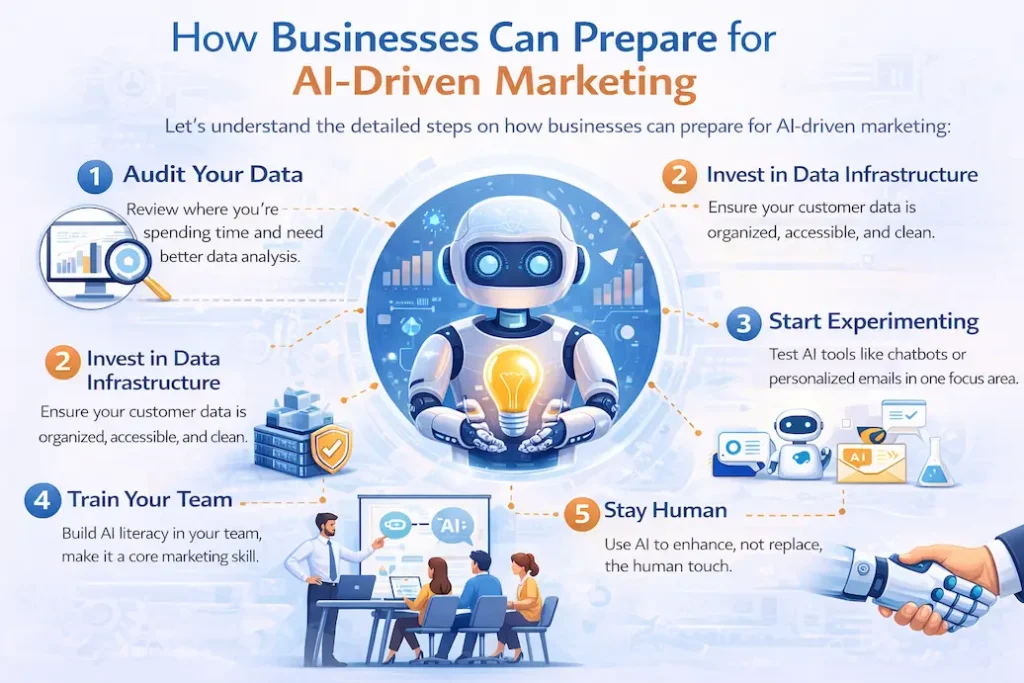
Let’s understand the detailed steps on how businesses can prepare for AI-driven marketing:
- Firstly, Audit Your Data: You should audit your data first, like where you are spending the most time on repetitive tasks or where you could do better data analysis and improve decisions.
- Secondly, invest in data infrastructure: Before you rely on AI tools, make sure your customer data is organized, accessible, and clean, as this is the foundation on which everything else builds.
- Thirdly, start experimenting: Pick one area, maybe email personalization or chatbot customer service, and test AI solutions. Learn what works for your specific business before expanding.
- Fourth, train your team: Whether you are a marketing manager upskilling your team or a student building your career, AI literacy is now a core marketing skill. Dedicate time to learning these tools.
- Fifth, stay human: The businesses succeeding with AI aren’t becoming more robotic; they’re using it to be more human with exceptional capabilities.
Conclusion
How AI is transforming digital marketing in 2026 isn’t a future prediction; it’s your current reality. If you are a student building a skillset, a business owner growing your brand or company, or a marketing professional staying ahead of all the updates, AI is now part of your toolkit.
This transformation is creating both incredible opportunities and serious challenges. The marketers thriving right now are the ones who blend AI’s power with human insight, who use technology to enhance creativity rather than replace it, and who never forget that behind every data point is a real person with real needs.
If you want to transform your marketing with AI the right way, we at Digital Orix help businesses navigate this new landscape with strategies that combine technology and timeless marketing principles.
FAQ: How AI Is Transforming Digital Marketing
Will AI replace digital marketers in 2026?
No, but marketers who use AI will replace those who don’t use AI in 2026.
How does AI affect SEO and search rankings?
Now, SEO requires optimizing for AI answer engines, focusing on entity-based search, conversational queries, and structured content that directly answers specific questions rather than just targeting keywords.
Is AI marketing suitable for small businesses?
Absolutely, now AI is open, affordable, and accessible means even small startups can access high-end computing and datasets for a fraction of the previous cost.
What marketing tasks will AI automate the most?
Routine tasks like data analysis, basic content drafting, and multilingual translation are almost entirely automated or assisted by AI today.