Do you still search for your answer on Google, or has GPT or another AI tool replaced your Google habit?
Don’t worry, it’s not just you. The digital world is moving fast, and it’s not just limited to landing your site on Google’s first page anymore. Now, you will have to become the answer people search for.
AI tools like ChatGPT and Google Gemini are not just another passing trend. They are completely changing how people search for information. Instead of scrolling through a bunch of links, people want a straight-up answer, generated on the spot.
Traditional search is no longer the only way people find information, and those who wait to adapt are losing traffic every single day. The era of Answer Engine Optimization (AEO) is booming, and to understand this better, this blog is your blueprint to mastering the shift: from understanding the AI-powered search revolution to the exact strategies you need to outrank the competition in the age of Gemini and ChatGPT.
What Are Answer Engines?
Chat GPT, Google Gemini, and other popular AI tools are acting like the answer engines, providing all the desired information in one go, by eliminating the hustle of juggling between pages for hours.
Answer Engines take all the scattered information from the web and their own training data, then pull it together into one clear, conversational answer for you. Instead of dumping a bunch of links onto your screen, these tools just tell you what you want to know, right then and there.
For example, you are searching for “how to make garlic bread.” Usually, you get a long list of websites to click through. But with an Answer Engine, you just get the recipe, the ingredients, and even a few helpful tricks all bundled into one reply. Easy right?
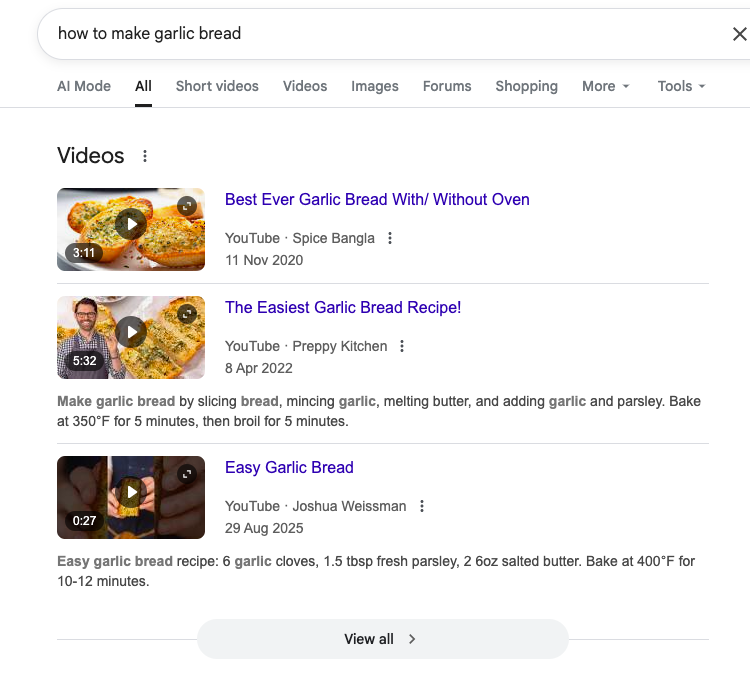
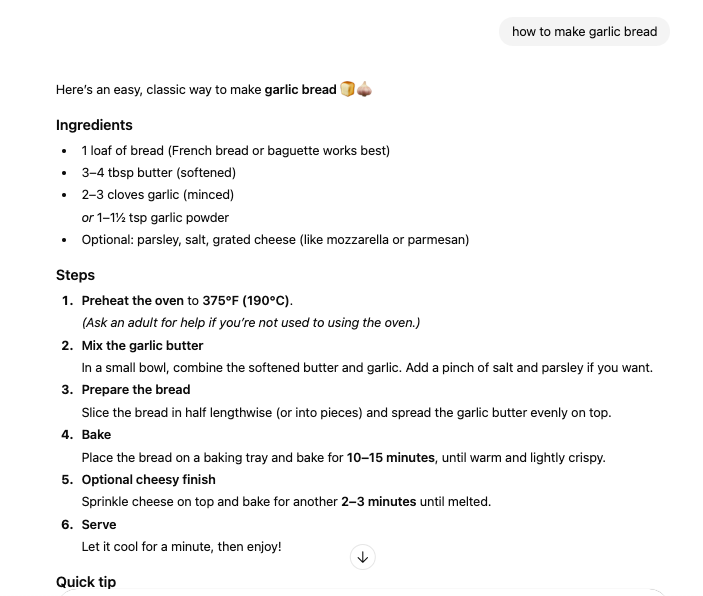
Now, let’s talk about the examples changing the landscape today:
- Google Gemini / AI Overviews: Now, Google shows AI-generated summaries directly on the search result page. So, instead of just seeing a list of website links, you will see a concise, easy-to-read answer written by AI that quickly solves all your doubts.
- ChatGPT: This one is the go-to chatbot for people who want human-like answers to tricky questions. It is fast, it sounds real, and it actually makes sense most of the time.
The Major Difference Between Traditional Search and AI-Powered Answer Engines
The goal of traditional SEO was to rank your page to get a click, whereas the goal of AEO is to provide the quotable answer, even if the user never clicks.
Let’s understand AEO VS SEO with the given table:
| Feature | Traditional SEO (Search Engine Optimization) | AEO (Answer Engine Optimization) |
| Primary Goal | You are chasing clicks and that number one spot, aiming to bring people to your site. | You want your answer featured or cited by the AI. It’s about being the source, not just the destination. |
| What you measure? | All about organic traffic, how many people actually click. | Visibility. Are you getting mentioned? Is your brand showing up in those AI answers? |
| Kind of Searches | Short and straight to the point. Like the best marketing tools. | Longer and more conversational, like, What are the pros and cons of the top five marketing tools? |
| Content Style | You go deep. Long-form content, stuffed with main and secondary keywords. | Short, clear answers. Lists, tables, Q&As. Make it easy for the AI to grab. |
| Success Indicator | Showing up in those classic top ten blue links. | Getting picked up for an AI Overview, a Featured Snippet, or quoted by the AI directly. That’s the new win. |
How ChatGPT and Google Gemini Are Impacting SEO
Zero-click searches are taking over. It means that when SERP displays answers to the user’s query at the top of the page, and the user doesn’t bother to click on other websites.
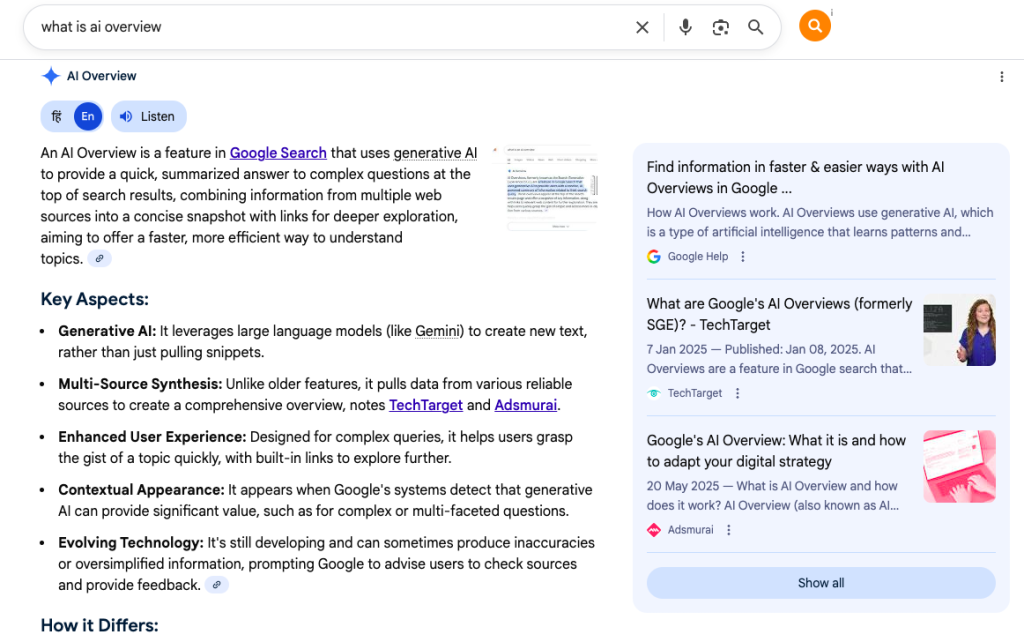
Now, more and more people find what they want right on the results page from AI and search engines. The zero-click searches are climbing fast, and AI Overviews are speeding things up even more.
- Traffic Decline for Informational Queries: People don’t bother to click on any link for informational queries. Let’s understand it with the help of an example. Suppose someone types “What is photosynthesis?” into Google. The AI generates a concise summary at the top. Most people won’t bother clicking through to your blog post anymore. So, for easy, informational searches like that, you are probably going to see fewer visitors.
- Increased Value of Quality Traffic: While volume might drop, the traffic you do get from AI Overviews or featured snippets is often higher-intent traffic. If a user clicks after reading an AI summary, they are usually looking for deeper details, specific examples, or a transactional opportunity.
- The Rise of E-E-A-T: E-E-A-T stands for Experience, Expertise, Authoritativeness, and Trustworthiness. It is a framework that Google uses to evaluate the quality of content, considering it as an expert source of information, which helps in ranking your content on answer engines.
Answer engines like Google Gemini or ChatGPT want trustworthy, expert sources. If they quote you, your brand gets tied to the answer, which shows off your experience, expertise, authority, and trust.
Strategies to Optimize for Answer Engines (AEO)
If you want your site to stand out for Answer Engines, you have to shape your content for how AI actually works. Here’s what gets results:
- Write as People Talk: Forget about stuffing keywords. Instead, build your content around real questions like “How do I fix a dripping tap?” or “What’s the difference between cold brew and iced coffee?” These are the questions people type or say out loud, especially with voice search.
- Put Quick Answers Up Front: Every page should kick off with a short, punchy answer about 40 to 60 words right under the main headline. This makes it easy for AI to grab your response for search snippets or summaries.
- Use Schema Markup: Add things like FAQ, How-To, or Article Schema to your pages. These can help AI instantly understand what your page is about and how to use it.
- Show You Know Your Stuff (E-E-A-T): AI favors trustworthy, expert content. Make your content visible. Give them bios and credentials. Back up your claims with solid sources and link to respected research or government sites. It’s all about credibility.
- Organize with Lists and Tables: AI loves order. Break things down into steps with numbered lists, or lay out comparisons in clear tables. Bullets and lists make it easy for AI to scan and summarize your info.
- Build Out Topic Clusters: Don’t just drop one giant article and call it a day. Create a main “pillar” page that links out to a bunch of related deep dives on sub-topics. This shows AI you are covering the whole subject, not just one topic or one keyword.
- Keep Things Up to Date: AI wants the latest info. Stay on top of trends and stats, and update relevant content regularly.
Challenges and Opportunities
Challenges:
1. AI and answer engines love quick, straight-to-the-point answers, but that means fewer people actually visit your website.
2. People often find everything they need right on the search results page, so they don’t even bother clicking through.
3. When visitors leave your site almost instantly, it’s tough to keep them interested or turn them into customers.
Opportunities:
1. If you focus on voice search optimization and those featured answers, you can boost your brand’s credibility.
2. When you share expert advice in a clear, organized way, AI tends to pick up on it and highlight your insights.
3. Government-backed AEO research backs this up: answering common questions really does help you get noticed, even when you’re up against tough competition.
The Future of SEO in the Age of Answer Engines
Anirudh Singla, Pepper Content’s CEO, has a lot to say about future SEO in the age of answer engines. He explains that AI search engines no longer rank web pages in a list; they are pulling answers together.
So, the real battle for the future isn’t for a spot on the search results page. Now, you want your brand to land a place inside the AI’s memory and decision process.
He describes this new growth path as the Visibility, Citability, Retrievability Flywheel. It is what drives organic marketing now, in the AI-powered SEO world.
- Visibility: Make sure the model notices your content. That means structured data and credible sources.
- Citability: Set up your content so the model can easily quote you. Keep things modular, verifiable.
- Retrievability: Keep your brand facts consistent everywhere, so the AI can pull them up when it’s piecing together answers.
Digital visibility is changing right before our eyes. But traditional SEO is still there.
AEO is not here to shove SEO aside, it builds right on top of it. You still need solid technical SEO, quick load times, and real, quality backlinks. That’s what helps AI find your content and actually trust it.
Now, you have got two audiences to win over: real people and AI models. Your strategy has to do both: write content that’s useful for humans, but also structured enough for machines to read and understand.
At Digital Orix, we don’t pick one side; we use the best of old-school SEO and mix it with smart AEO moves to earn real authority for your brand. We don’t just want you to show up in the rankings. We want your brand to be the one everyone cites as the go-to source.
So, if you are looking for an agency that uses all the best SEO tactics and helps your brand rank on SERP and Answer Engines, then get in touch with Digital Orix, where we help you lead this new era.
For more information, visit https://digitalorix.com/.
FAQ
What is the difference between SEO and AEO?
SEO is about ranking your brand in the lists of search results, while AEO focuses on structured, question-based content and visibility in AI-driven results.
How can brands optimize for ChatGPT and Gemini searches?
Optimize your website with natural conversational content, proper answers, and the latest schema markup. Use AI and AEO tools for real-time testing and predictive analytics.
Does AEO replace traditional SEO practices?
AEO doesn’t replace SEO, it complements it, letting you adapt core SEO principles for AI-first engines while still maintaining best practices for organic search.
Why are zero-click searches increasing?
AI engines aggregate and deliver relevant answers directly on search result pages, so users don’t need to click through to other sites, raising zero-click rates sharply.